
Bulgaria: A Country of
Underappreciated Nature and History
Are you ready for Bulgaria?
Why Bulgaria
When we told our friends and family we were going to Bulgaria, we always got a variation of the same reaction: “I’ve never been and I’ve never thought to go, but maybe I should!” This reaction perfectly sums up the travel situation in Bulgaria right now.
While not exactly unheard of, the country isn’t on most travellers’ radars as a must-visit location. And if we are honest, the same was kind of true for us, too. We planned our trip mostly because we saw a deal on flights from Berlin over Easter. But once we started to research what we could do in a short visit, we realised that we really should have thought about coming sooner.
Two things made Bulgaria especially attractive to us:
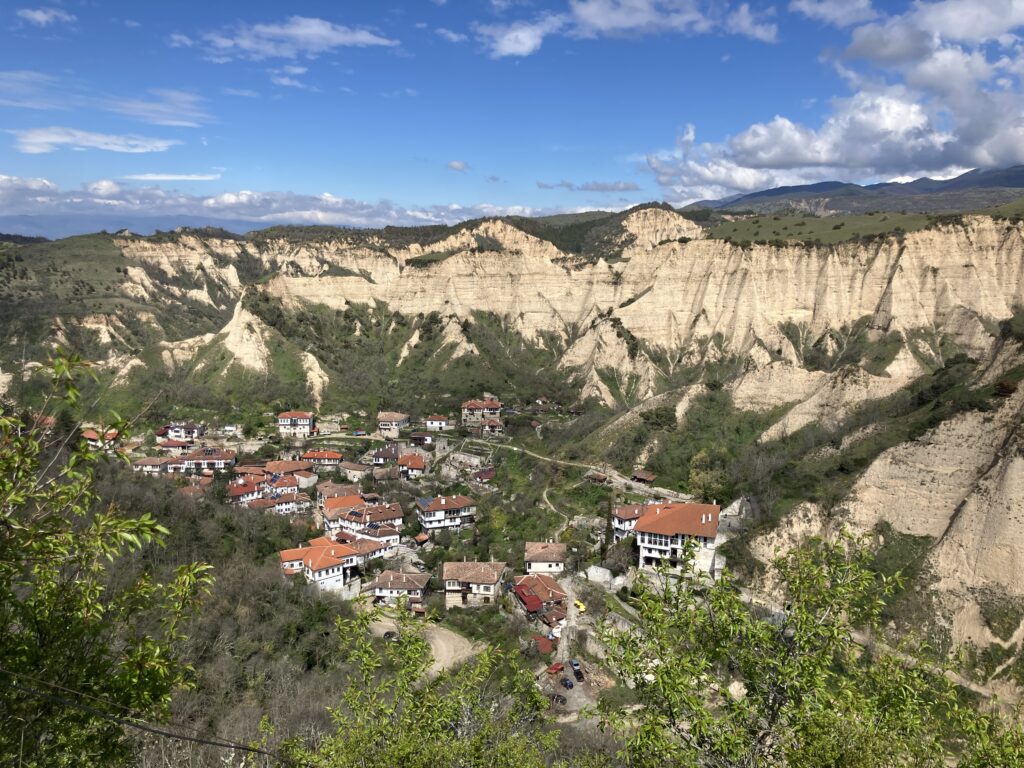
- There are some seriously breathtaking, and mostly untouched yet conveniently located, natural landscapes.
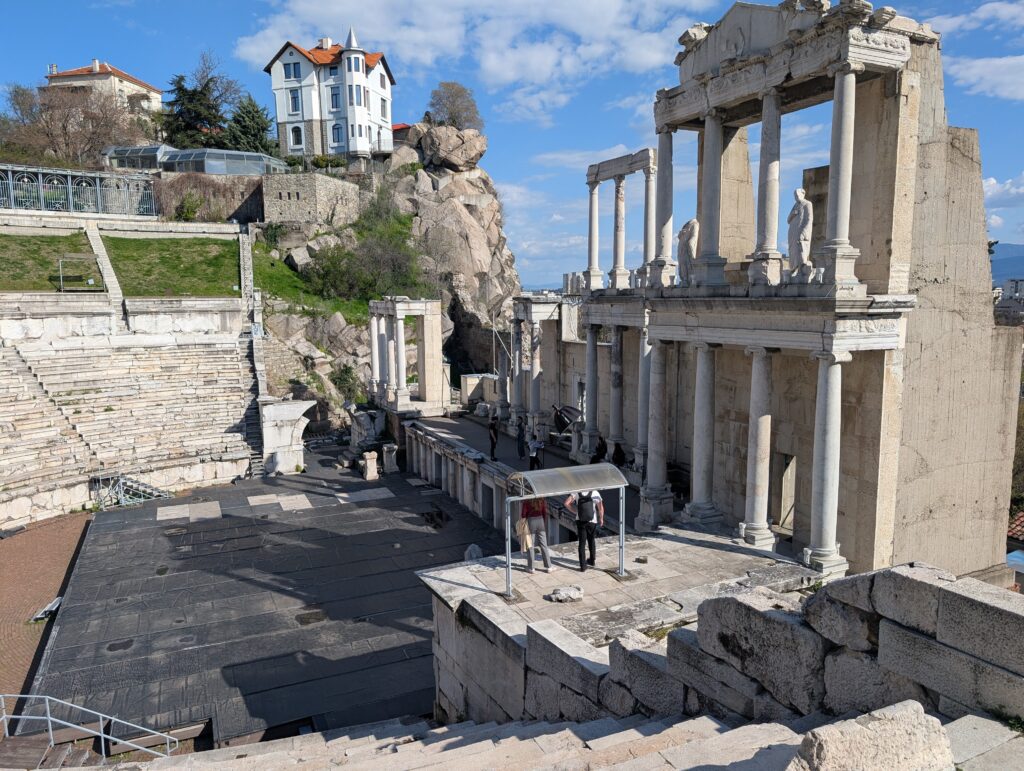
- Bulgaria’s visible history is fascinating: the Thracian, Roman, Ottoman, and Communist periods have left distinct fingerprints on the country’s physical and social fabric.
If that all sounds good to you, then great news: you’re going to have a great time in Bulgaria!
Ratings

Highlights
Best for:
- Low-budget trips
If you see this after your page is loaded completely, leafletJS files are missing.
Know Before You Go
Transportation
Of Bulgaria’s four main commercial airports, the ones with the most flights are Vasil Levski Sofia Airport, Varna Airport, and Burgas Airport. Plovdiv can be more convenient, but offers significantly fewer options. Most people will find Sofia’s airport the most convenient place to enter, especially as it is the main hub of Bulgaria’s national carrier, the very underrated Bulgaria Air.
You can also enter Bulgaria by land, with regular buses, trains and major roads offering connections with neighbouring countries. For transport options, check the schedules on 12Go.
Bulgaria allows the standard period of 90 days visa-free entry for citizens of Schengen Area countries. Others may need to apply and pay €80 for a visa. Make sure to check in advance what applies to you before you travel!
Bulgaria has five climate zones, so the weather varies. Generally, the North is colder than the South, with Central Bulgaria being somewhere in between, the East Coast being relatively mild, and the mountainous areas having more rain and Alpine conditions.
Peak tourist season stretches from June to September, when the weather is hottest and driest. We visited in early April and saw rain, sun, wind, and even snow. However, things were much less crowded than we expected at this time and the rain was not too bad.
We recommend visiting around Easter (late March to early May), especially as you may catch some local festivities. We also heard that September and October see reduced crowds and generally mild weather, depending on where you visit, so that could be another option.
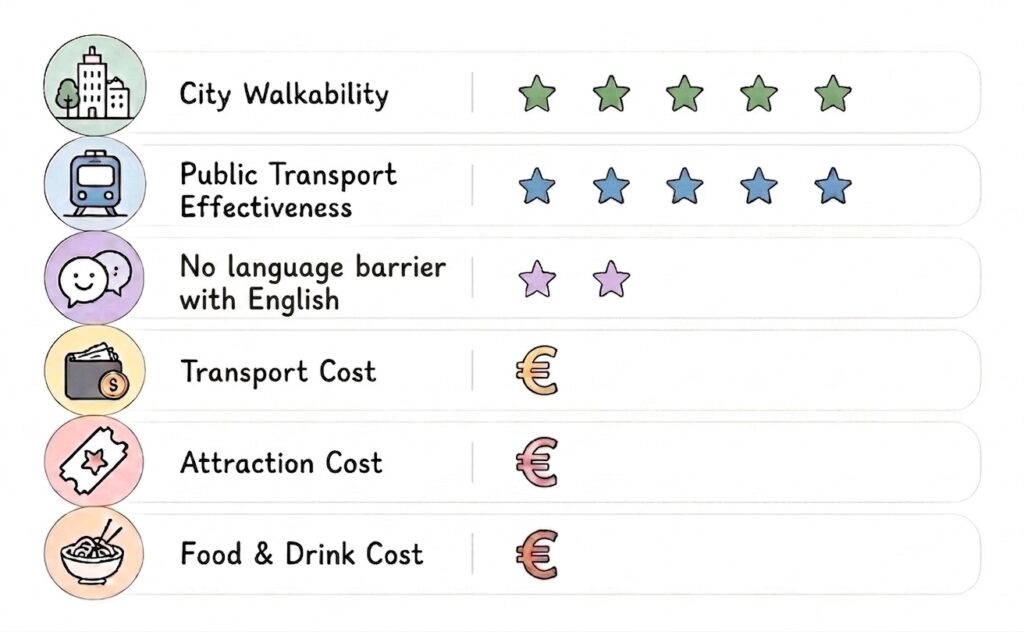
Buses are common, frequent, and affordable throughout Bulgaria. Sofia alone still has operating tram and metro lines, which are also affordable and depart frequently.
In Sofia, public transport journeys cost a flat fare of €0.80 per journey, with a daily cap of €2.00, beyond which all bus, metro, and tram rides are free for that 24-hour period. In other places, bus journeys cost around €0.50 per journey, without a formal daily cap.
While we did not use them, ride-hailing companies operate in major cities. These companies, including TaxiMe, Taxistars, OK Supertrans, Volt, and Yellow, require registration and the use of their apps, which can be downloaded for free on the App Store or Google Play. Using these apps is preferable to flagging down taxis, and will cost around €1.40 to start then around €0.75 for each additional KM.
As everywhere, only get in cars with visible licensing and, if taking a normal taxi, ask for the meter to be used.
Domestic flights do not depart frequently, making intercity bus and train travel the best option for most visitors. Travelling by bus is often quicker but slightly more expensive than going by train. You can buy tickets either by going to the station or online, but make sure to buy them a few days in advance, as they often sell out.
Rail tickets can be bought online through the national provider. However, there are only third-party aggregators which give information for Bulgarian intercity bus tickets across all times and companies. The best option we found is the old reliable 12Go, which includes both buses and trains, so provides an easy way to compare prices and times.
With a valid driving license, renting a bike or car might be the best option. However, some roads, especially major routes, are better maintained than others. Service and petrol stations often have small convenience stores and cafes with hot drinks and sandwiches.
Money
Euro (€).
Public transport as well as most restaurants and activity providers in major cities accept Visa and Mastercard payments. Cash is still primarily used by street food vendors and in smaller towns, so always keep some Euros handy and take some out before travelling into the countryside.
ATMs are common in the larger cities. As a rule, it is much safer to use bank-affiliated ATMs, which also often do not charge withdrawal fees, such as: UniCredit Bulbank (УниКредит Булбанк), DSK Bank (Банка ДСК), Postbank (Пощенска Банка), Ziraat Bank (Зираат Банк), and Central Cooperative Bank (Централна кооперативна банка).
We like using Revolut’s in-app ATM Locator, as it helps you to find the nearest ATMs and often gives you information about withdrawal fees.
We also recommend taking money out at ATMs rather than changing money at the airport or at dedicated currency exchangers. Provided you use a card which follows Mastercard’s or Visa’s exchange rate (another reason we use Revolut!), make your withdrawal in Euros, and use a fee-free ATM, you will nearly always get more Euros for your money at an ATM.
But make sure to pay attention to withdrawal limits: in addition to your bank’s stipulations, some Bulgarian banks only allow you to withdraw €100–200 in a single transaction, so plan accordingly if heading into the countryside.
Optional and not expected. If you want to tip, round up to the next Euro or add on 10%.
Logistics
As we only stayed in Sofia, we can only give specific recommendations about where to stay there (and we do, in our Sofia Itinerary).
At the time of writing, accommodation is lower than the European average: per night, a hostel dorm bed is generally between €5 and €15, a two-person private hotel room can range from €35 to €100, a private apartment can be between €30 and €150, and villas can exceed €200.
Obviously, these prices will change depending on when and where you travel, and some sites report that accommodation might get more expensive in the coming years.
As in most places, Hostelworld, Booking.com, and Airbnb provide options for all budgets.
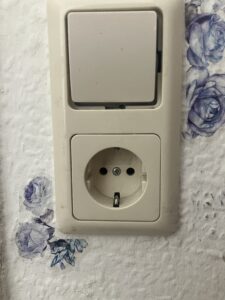
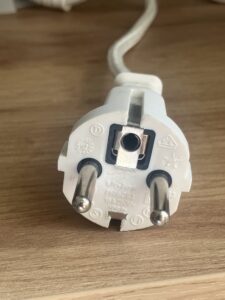
Bulgaria uses the European standard Type F sockets (two round prongs, 230V, 50Hz), which also accept Types C and E. Visitors from outside Europe will need at least a socket converter, potentially with a voltage converter if your electronics are a bit older and are built to run on 110/120V. We always take this international converter (Affiliate link) on our trips, as it covers all bases.


Phone signal and data coverage is pretty good throughout Bulgaria, although will naturally be weaker in mountainous and rural areas.
Those with European SIMs may automatically have access to data and phone signal through their pre-existing plans.
You can buy pre-paid SIMs/eSIMs at the airport, large supermarkets, petrol stations, or official provider stores. A1, Yettel, and Vivacom are the largest local providers. If preferred, you can also order an eSIM in advance, although many do not provide a Bulgarian phone number. We’ve had the most sucess with Maya Mobile in the past.
Major cities have a good mix of larger chain supermarkets with regular closing hours and smaller convenience stores, some with regular closing times and others open 24 hours a day.
The most common supermarket is Billa, although it’s also one of the more expensive options. Also common, yet a bit cheaper, are Lidl and Kaufland. We didn’t try any of the smaller brands, such as Fantastico or T Market. In our opinion, Kaufland is the best for price, range, and quality.
Generally, food is not too expensive, but that depends on where you eat. At local bakeries, you might pay €2 for a large pastry and a drink. A big slice of street pizza is similar, while a small cup from the common coffee machines is €0.50 to €1.00. Chain fast food like McDonalds is a bit more expensive, hovering around €5 to €15 per person. Sit-down restaurants will set you back at least €15 for a main dish and a drink, with higher-end establishments, especially in tourist areas, also charging higher-end prices.
We collected some of our favourite options in our Bulgarian food guide.
Generally, restaurants close around 10pm, but make sure to check before turning up. Reservations for tables at sit-down restaurants are advised if you are travelling in peak months. We only needed to book one table, and even then, there were a lot of free spaces when we arrived. More casual places and street food you can just turn up.
We didn’t go to any clubs or bars to drink, so we don’t have a good sense of prices there. Beer and wine in other places are not too expensive, at around €3/4 a glass depending on where you go.
Tap water is drinkable in major cities and there are occasional places to fill up outside. Sofia has thermal spring water near the old baths, and it’s worth tasting it, even though you probably won’t like it… That said, drinking unfiltered tap water anywhere new can cause stomach issues if you aren’t used to the local bacteria. You may prefer to buy bottled water to drink, or buy a water bottle with a built-in filter.
Society
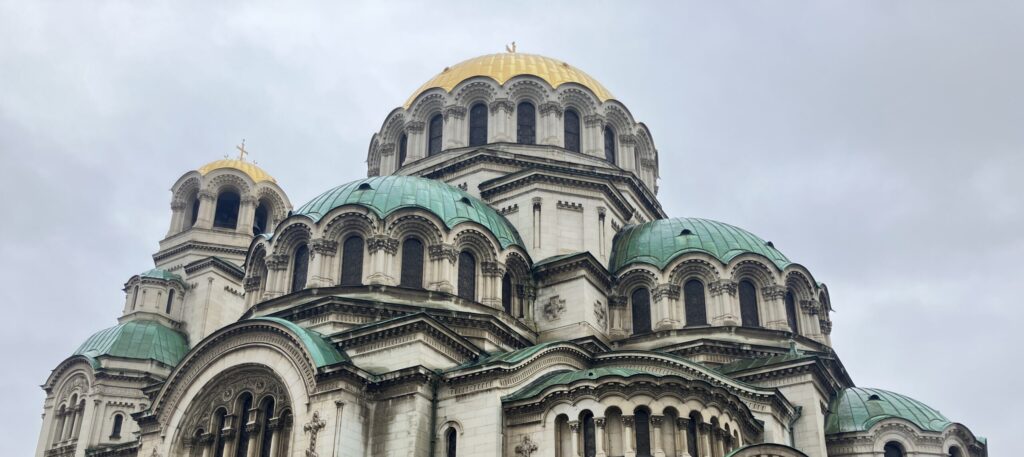
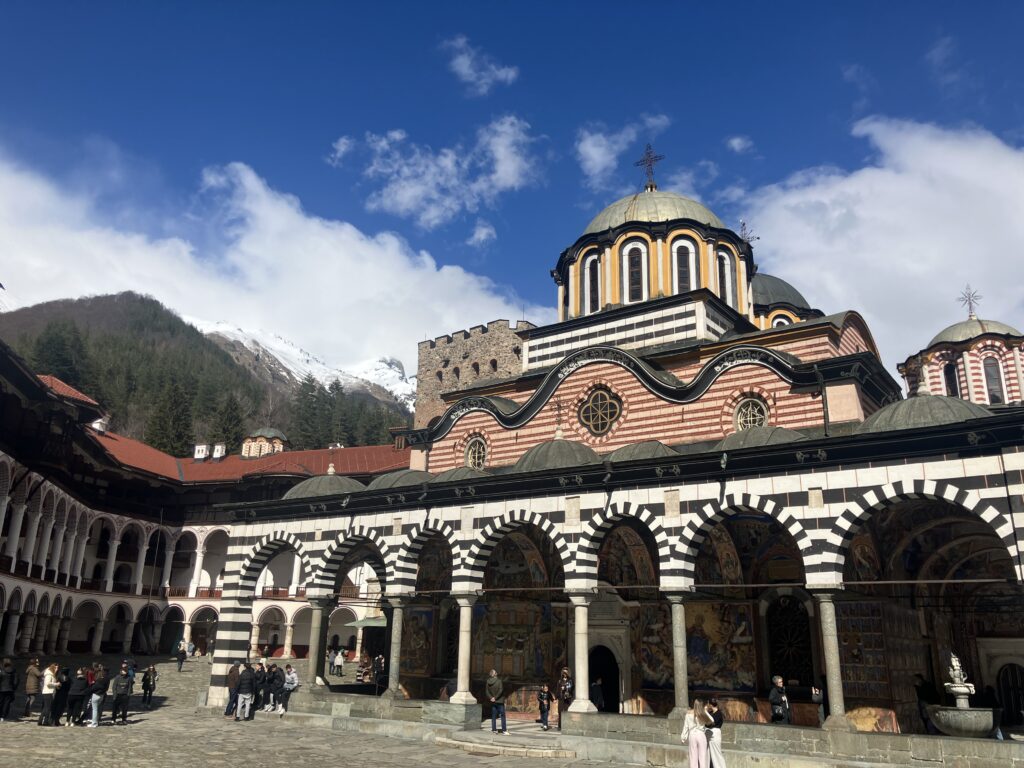
Since the ninth century, Christianity has been the most dominant religion in Bulgaria, with Eastern Orthodox currently having the most followers at this point. Islam is the second-most popular religion. So, expect to see a lot of churches and a few mosques. If you visit any religious buildings, make sure to follow their rules, often stated clearly at the entrance. Generally, you should dress modestly (make sure your clothes cover your shoulders and knees), not eat or drink inside, and speak quietly.
Bulgarians mostly speak Bulgarian (maybe not a surprise…), which uses the Cyrillic alphabet and is inflected. If you already know a language that uses Cyrillic or is used in/around the Balkans, then you might recognise a few things. English is relatively common in major cities, especially with younger people, and many signs include both English and Bulgarian. That said, learning a few phrases before you go really helps, especially if you are going beyond tourist areas.
Bulgarians might seem a bit blunt or reserved, but as a rule they’re also very relaxed and friendly, so there are no special customs you need to know. So long as you act like a respectful visitor by, for instance, not littering, not being overly loud in public spaces, and dressing appropriately in religious spaces, you should be fine.
Bulgaria is pretty safe. At no point did we feel in danger, even at night.
That said, you should still do the same safety precautions you do everywhere: avoid unlit places, especially when alone; at night, use reputable taxi companies; and don’t leave food, drink, or belongings unattended.
We also did not experience any of the usual crimes and scams that target tourists (pickpocketing, overcharging, orbag-snatching), nor those present in most major cities (card skimming or vehicle break-ins), but it is best to be cautious and remain aware of your surroundings.
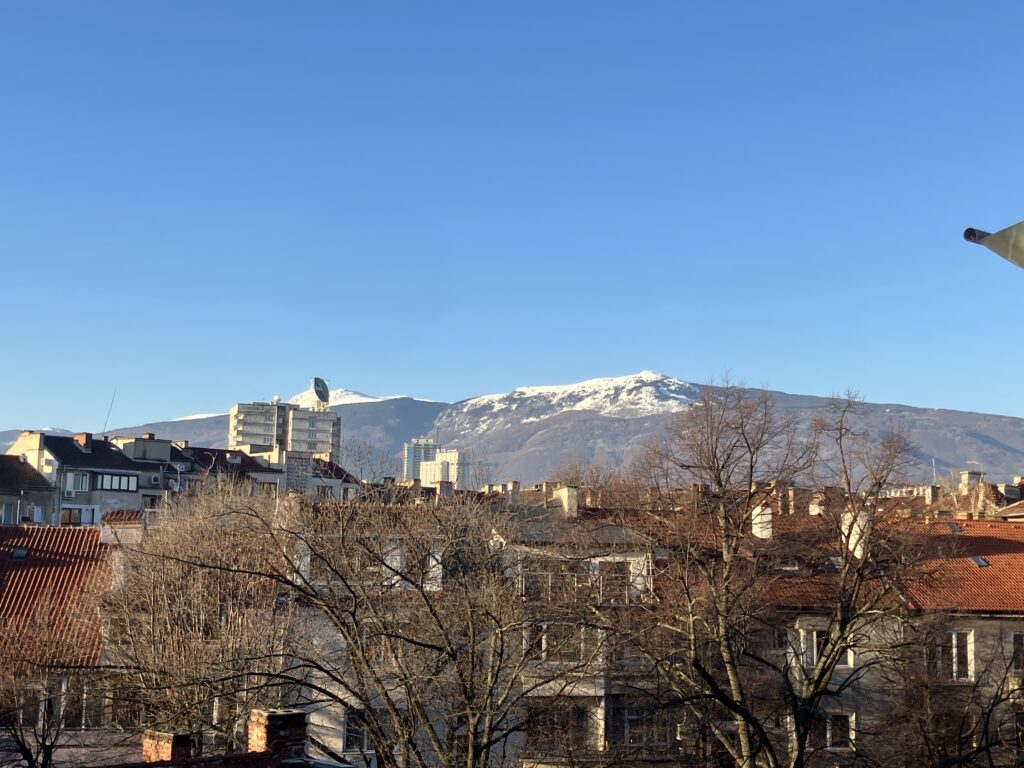
More likely to occur are minor injuries from exploring the mountains, which have signposted trails but uneven paths, sometimes have chains/rails, and can occasionally have snowy or icy conditions towards their peaks. We found this ourselves on our hike to Boyana Waterfall.
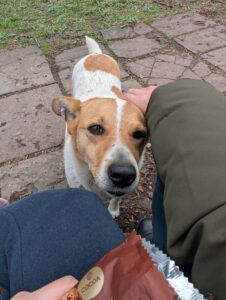
There are also quite a few stray cats and dogs, who can be friendly, but can also bite or scratch unexpectedly. It’s probably best to avoid stray animals as much as you can. Either way, make sure you have good travel insurance before you visit.