

While a pretty short period, 4 days gives you enough time to see quite a lot in Bulgaria. We managed to pack in a decent amount of activities and sights during our quick trip, and we don’t feel like we missed that much.
That said, we did have to skip a few things which looked interesting. There’s also a few things we did which in hindsight we would have preferred to swap for other activities. So, we’re confident you could also stretch the itinerary to a week or two, if you have the time!
Here, you have our 4-day route, followed by suggestions for additional things to do if you want to expand your visit to a week or more. We focused on western Bulgaria, basing ourselves in Sofia then travelling a few hours out for day trips. If going further than Plovdiv to the East, it would probably be better to stay in other places, such as Veliko Tarnovo, Burgas, or Varna.
For each day, we also have more in-depth guides giving you further details about activities, sites, and restaurants, so make sure to check those out, too!
Day 1: Sofia Centre
In-depth guide: 24 Hours in Sofia: A Packed One Day Itinerary in Bulgaria’s Capital
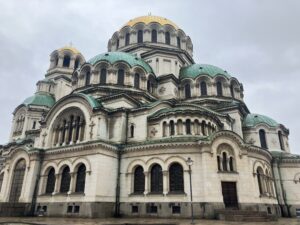
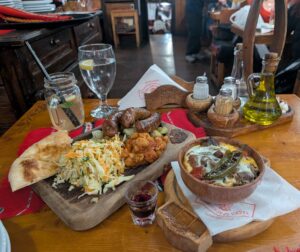
For our first full day, we wanted to get to grips with the history and food of Bulgaria’s capital, which is where we entered and probably where most visitors will start and end their journeys.
We arrived the night before, and only had chance to get some food quickly near our apartment then head to bed, so we were looking forward to seeing the historic parts of the city. There’s a lot in the way of churches, ancient architecture, and museums, and we planned to spend most of the day walking, with frequent breaks for food. Given that Sofia is pretty small and takes around 45 minutes to walk the length of the centre, we recommend this for you, too. Bear in mind that many of the city’s paths are made from uneven brick and stone, or have not been maintained super well, and so can be a bit tricky to walk on. But as public transport is excellent and cheap, you can easily use buses, trams, and metros to get around all day.
Day 2: Boyana and Vitosha Mountain
In-depth guide: Hiking Vitosha to Boyana Waterfall: Prepare Better than We Did!
We planned for our second full day to be spent on Sofia’s outskirts. After a nice breakfast and buying supplies in a supermarket, we wanted to head to Boyana, a neighbourhood south of the city and home to two things we wanted to visit: the famous Boyana Church and the foot of Vitosha Mountain, where there was a trail to Boyana Waterfall.
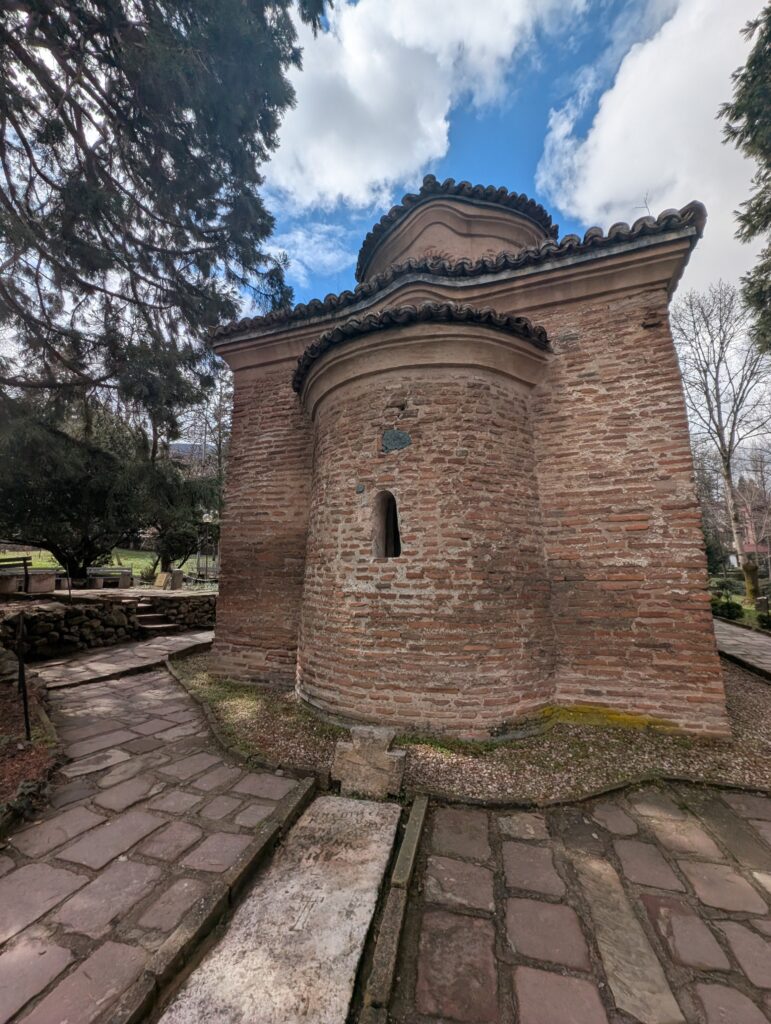
We started with Boyana Church, originally built in the 10th/11th centuries then expanded in the 13th and 19th centuries. The church, a UNESCO World Heritage building, attracts a lot of tourists, so visits are limited to 10-minute slots, booked in advance either at the ticket office on site (€6.14 per person) or by going through a tour agency. You can find more information about visiting times and rules while in the church area on the official website.
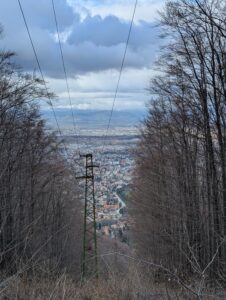
We planned to spend the rest of the day hiking Vitosha Mountain, taking up the trail from Boyana Church to Boyana Waterfall and, if we had time, beyond. Quick spoiler: we did not go beyond. The weather at the bottom was pretty good, dry with a bit of sun, but conditions as we climbed got colder and eventually icy.
If you have the time and the weather is ok, we strongly recommend the hike to Boyana Waterfall. The views were definitely worth the climb, and it felt like we were very far from any city, even though the trail starts around an hour away from Sofia centre. Just remember to bring water and snacks, as the only places to buy anything are near the bus stop for Boyana Church or beyond the Waterfall.
Day 3: Melnik and Rila Monastery
In-depth guides: Bulgaria’s Wine Capital and Smallest Town: A Short Guide to Melnik; Visiting Bulgaria’s Top Site: A Half Day at Rila Monastery.
For our third day, we planned to travel outside of Sofia then return in the evening. Our expectations were drastically exceeded. As the most visited attraction in Bulgaria, Rila Monastery topped our list of things to do in the country. The building and its mountainous surroundings definitely did not disappoint and is 100% a must-see for all visitors.
But we did not originally plan to go to Melnik. We only did so because, when looking how to get to Rila Monastery, we found that our best option was to take a tour with Traventuria, one of Bulgaria’s best tour agencies. Amongst the various options, the one that caught our eye the most, the one with the best availability, and the one with the smallest group, was this one, which includes a visit to Melnik.
Fair warning: there was a lot of travelling in this day. In total, we were in the van for around 6 hours 30 minutes (2 hours 30 mins Sofia to Melnik, 2 hours Melnik to Rila, and 2 hours Rila to Sofia). But despite only having a few hours actually in Melnik and Rila, we found the time there was pretty much perfect.
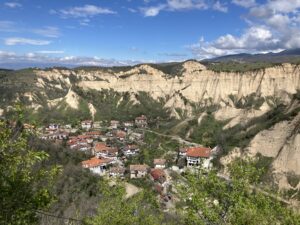
As Bulgaria’s smallest town, there’s not too much to see in Melnik, but what is here is very pretty, especially the dramatic Sand Pyramids, jagged sandstone cliff faces which you can see better by taking a short circular hike from the town centre. While some people say the hike is tricky, after the icy, narrow trails leading to Boyana Waterfall the previous day, the Melnik hike was a walk in the park. You can then finish by engaging with the area’s long history of wine-making by going to one of Melnik’s museums or, doing what we did, buying a bottle (around €4) and doing a free tasting in a shop.
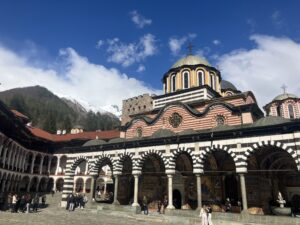
At Rila Monastery, you have lots to see, in particular the characteristic red-and-white striped Church. You also have other museums and buildings you can enter, and there’s a nice food area behind the complex. But make sure you leave enough time to check out all of the Church’s exterior frescos, which are very detailed and include a full-on depiction of Judgement Day.
Day 4: Plovdiv
In-depth guides: Exploring Bulgaria’s Best Ruins: 24 Hours in Plovdiv
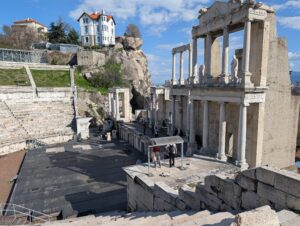
As Scone had taught about Plovdiv, we had a very good idea about what to expect and see in the city. Even so, the ancient ruins which litter Plovdiv still managed to blow us away.
This was another day of lots of walking and a fair bit of travelling. From Sofia, it’s pretty easy to get a bus to Plovdiv, taking around 2 hours each way and costing around €8–10 per person. While there’s clearly been some work done on the roads between Sofia and Plovdiv, there’s still a few bumpy sections on the way, more so than on the roads to Rila and Melnik. That said, the journey is still pretty convenient, and we think bus remains the best way to travel between the cities.
Plovdiv is much more picturesque, and typically has better weather, than Sofia, but is also very walkable, so long as you pay attention to the uneven, often hilly paths in the ancient parts of the city. Buses are relatively good here, but probably not necessary if you’re here just for a day, even if you’re travelling between the centre and bus/train station.
Expanding Your Itinerary: 2 Weeks
If you have more time, it’s super easy to expand this itinerary. As we like to move pretty fast when travelling, you could definitely slow down the pace of this itinerary and spend more time in each place.
Sofia and Plovdiv offer enough things to see and do for another day each. You could also add in extra destinations to break up journey times, and also go a bit further out, especially to the Pirin Mountains and the East Coast.
However, these are all just suggestions which we have not done ourselves, so we can’t vouch for everything on these routes. You could skip steps, add more, or swap things around as you want. This is your trip, after all! But it might make the most sense to do the route as a loop, beginning and ending with Sofia.
In any case, here’s a suggested 2-week itinerary:
Days 1 and 2: Sofia Centre
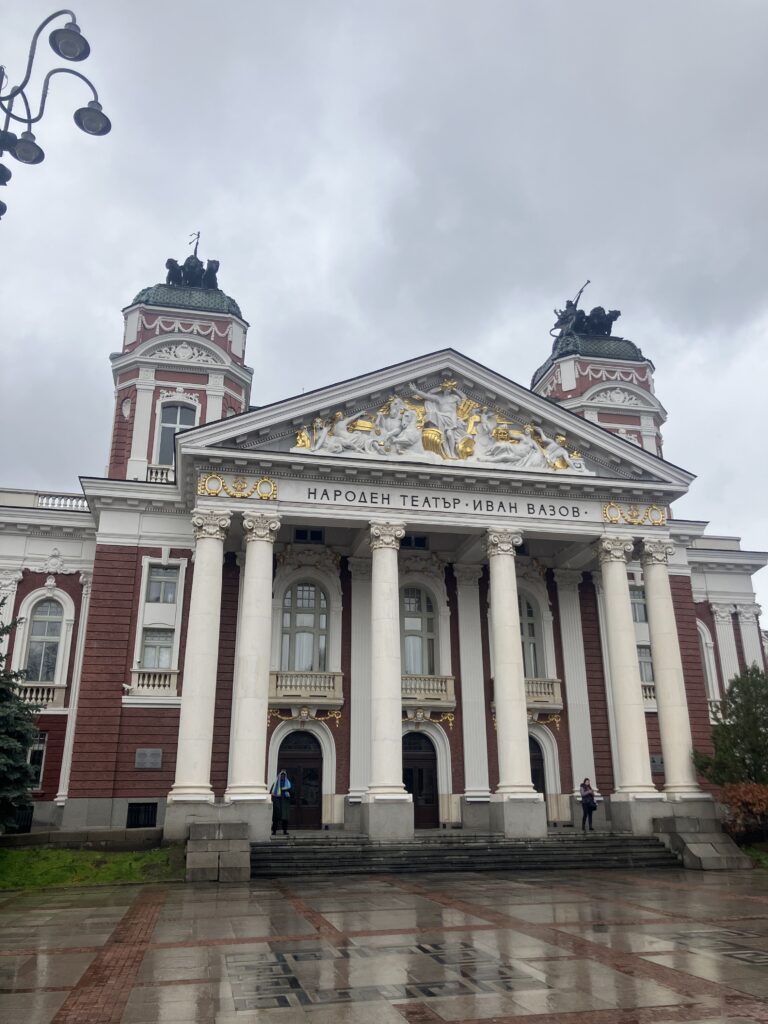
You could keep Day 1 as we have it in the route we followed, but there are also many museums we didn’t have chance to visit. In particular, the Regional History Museum (housed in the old thermal baths), the Red Flat (a Communist-era apartment museum), and the National Archaeological Museum (housed in a former mosque) all have excellent reviews and look fascinating. Seeing a show in the Ivan Vazov National Theatre and going to some of Sofia’s art galleries would also be excellent options which we wish we could have done.
Day 3: Boyana and Vitosha Mountain
You can keep this day the same, or perhaps mix-and-match with the other Sofia activities. If the weather holds up and you start early, you could also hike other parts of the Mountain, such as by ascending Cherni Vrah (‘Black Peak’, the highest point).
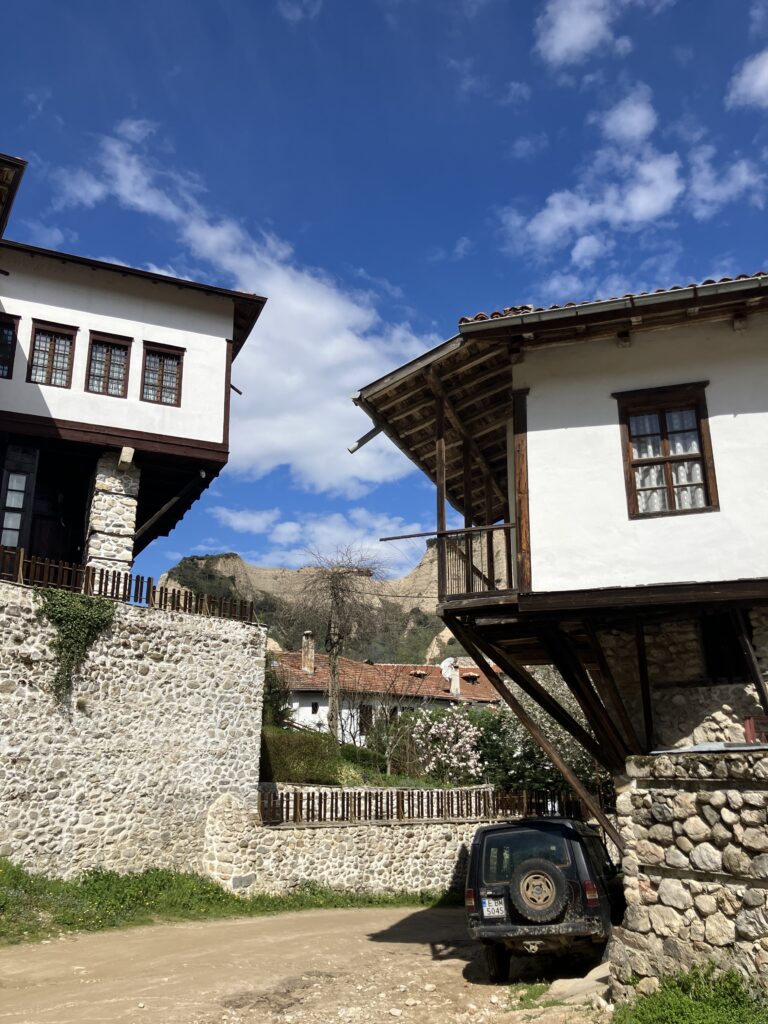
Day 7: Melnik
Whether you spend the night in Bansko or go back to Sofia, we still recommend a trip to Melnik. You can expand on the half-day as we have it in the route we followed by doing some of the other activities in the area, or stopping by the nearby Rozhen Monastery, a still-active medieval monastery which we heard provides other views of the sandstone cliffs.
Days 8 and 9: Plovdiv
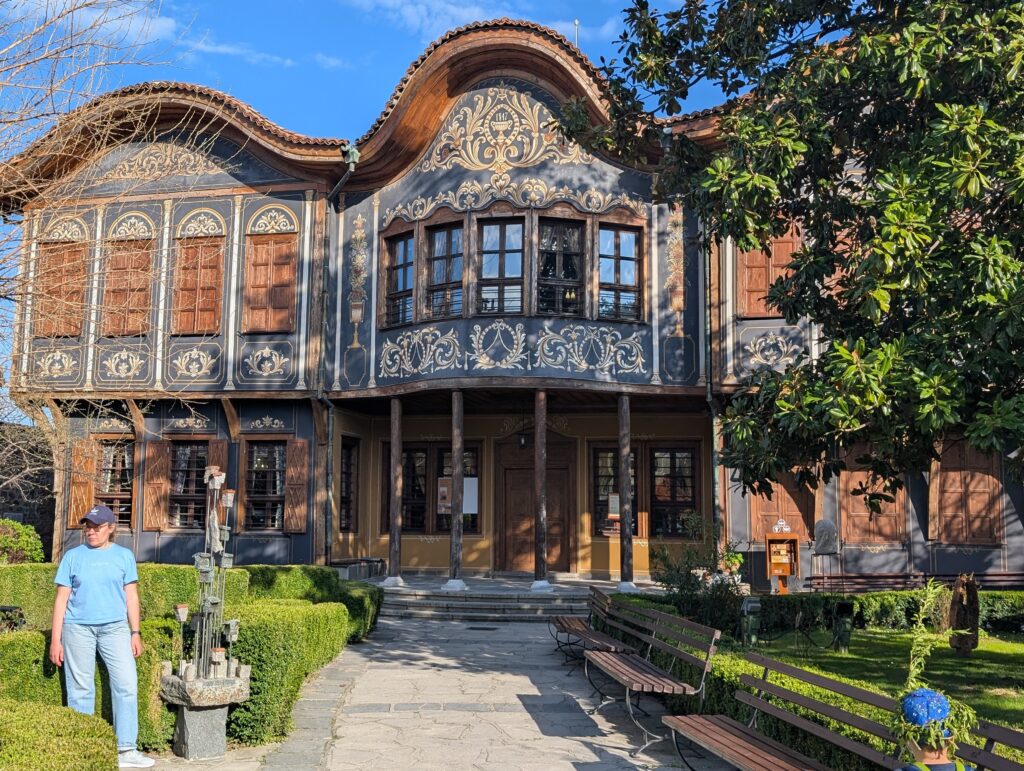
We recommend taking our day trip to Plovdiv as the base for two days in the city. You could easily add in visits to the other ancient sites (such as the Small Basilica), enter the old town houses and the Ethnography Museum, getting a vantage point over the city and in the shadow of a Soviet military memorial on Bunardzhika Hill, and, if it’s summer, see the singing fountains in Tsar Simeon Garden Park in the evening. You could also spend a day travelling to the nearby Asen’s Fortress, originally a 6th-century fort expanded in the 9th, 11th, and 13th centuries.
So, that’s our 4-day itinerary, with some suggestions for expansion! We hope you found it useful. We’d love to hear what you think about our route, and also, if you’ve already been to Bulgaria, what your favourite part of the trip was. What was your favourite place, activity, or site? Was there anything you would do again or skip? And what did you think of Bulgaria in general? Let us know in the comments below!